How to identify wood types in furniture
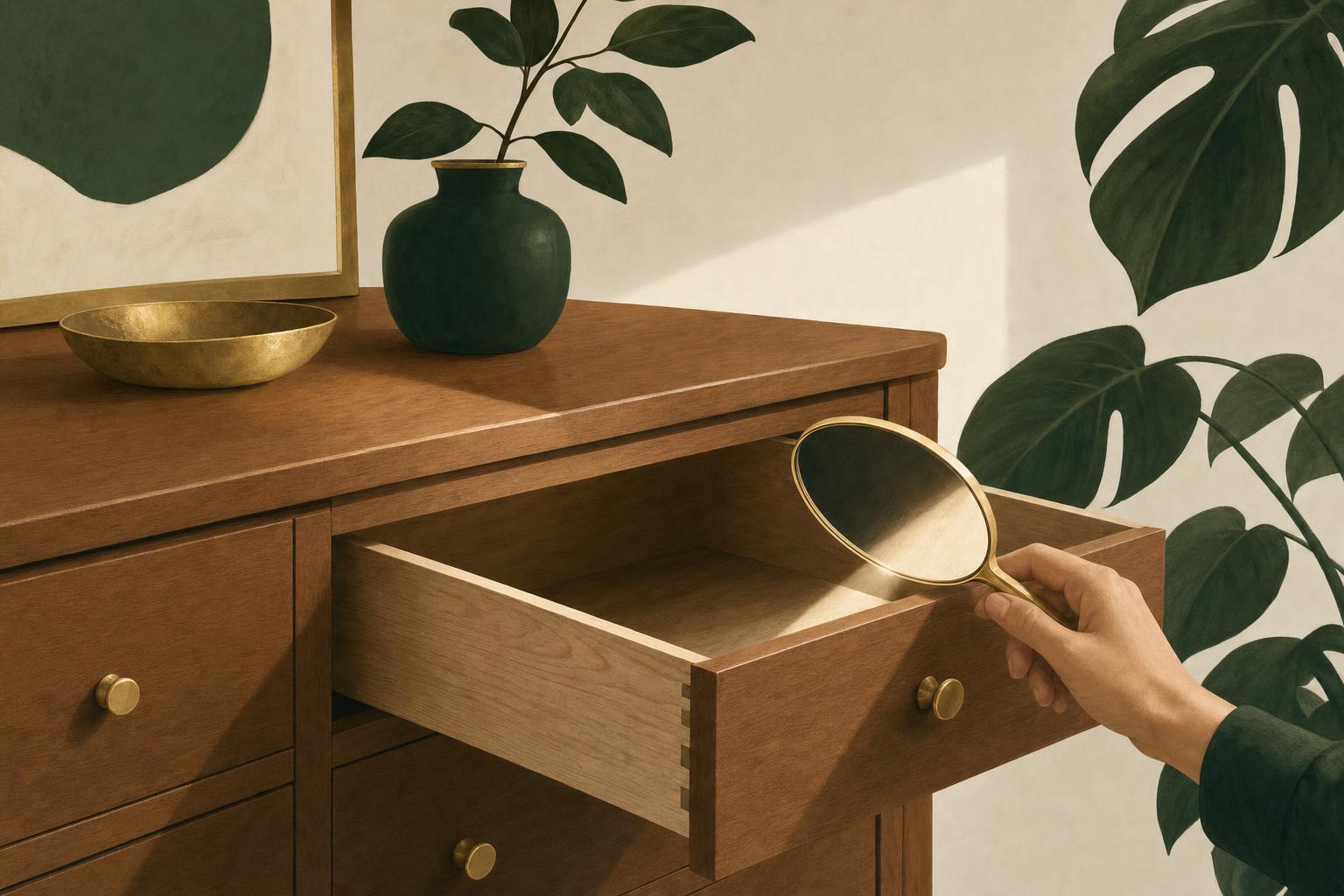
The wood in a piece of furniture is identified in two moves: confirm it is solid wood rather than veneer or MDF, then read the grain somewhere the finish is thin or absent. Drawer sides, the underside of a top, and the back of a leg almost always have a spot you can photograph and identify without harming the piece.
First, is it solid wood at all?
Check an edge or corner. Solid wood shows the same grain wrapping over the corner; veneer shows a thin face layer sitting on a different core, often with a visible seam line. Exposed chipboard or a uniform brown fuzz at a screw hole means MDF or particleboard, and species identification stops there.
Weight is a clue too. A solid oak dresser takes two people to move. The same dresser in veneered MDF is heavier still, while veneered honeycomb board is suspiciously light.
Reading grain through a finish
Stain changes color, not structure. Oak's open pores telegraph through almost any finish; run a fingernail across the surface and you will feel the grain lines. Maple and birch stay glassy smooth. Walnut shows its characteristic dark, slightly purple cast even under amber lacquer, and mahogany shows ribbon stripes that flip between light and dark as you move around the piece.
The five woods you will meet most
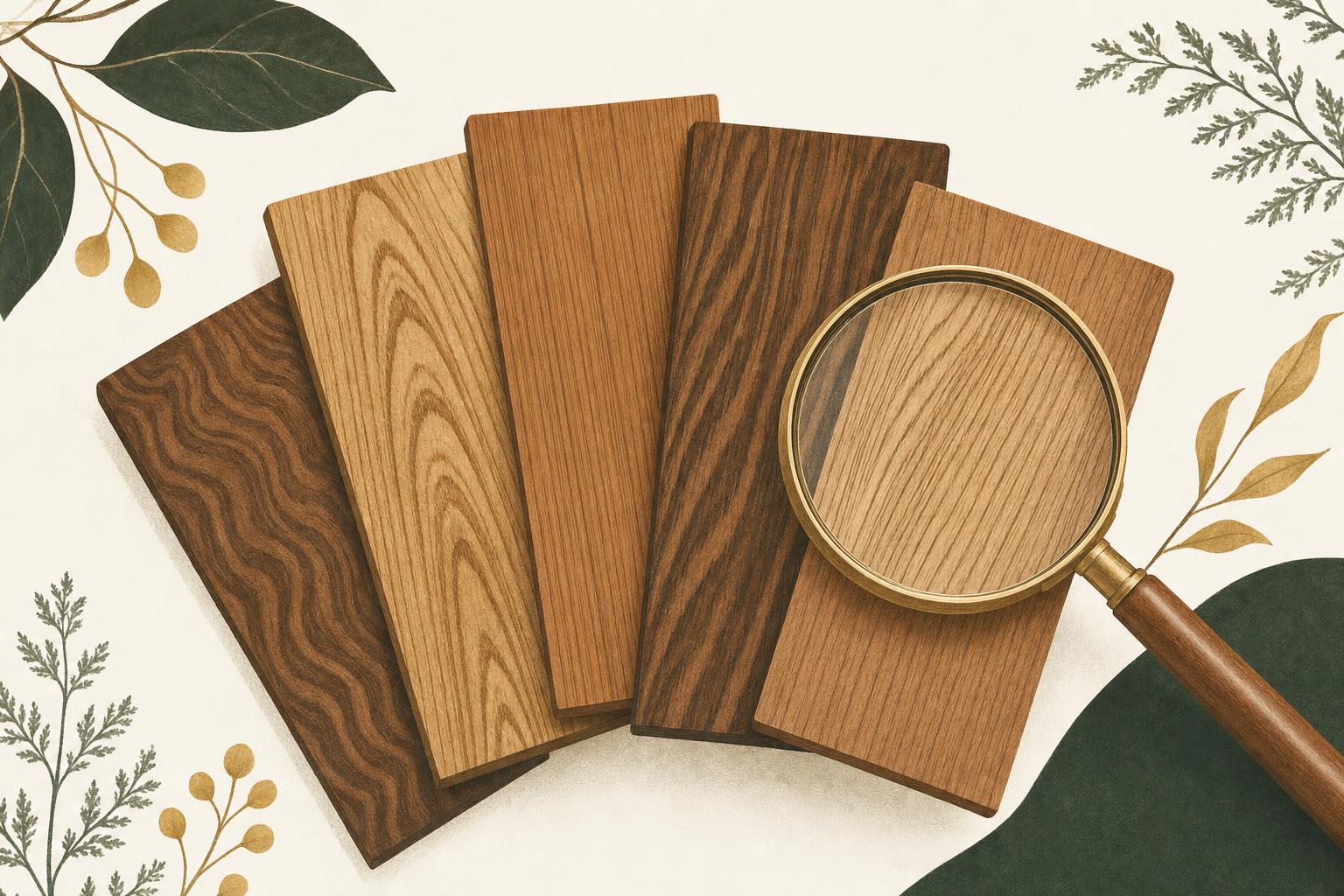
Most furniture made in the last century uses a short list. Oak: prominent grain, heavy, often quartersawn with ray flecks on older pieces. Walnut: chocolate brown, fine grain, common in mid-century work. Maple: pale, smooth, hard to dent, the default for butcher blocks. Cherry: warm reddish brown that deepens with sunlight, fine even grain. Mahogany: reddish with interlocked ribbon grain, common in antiques and reproductions.
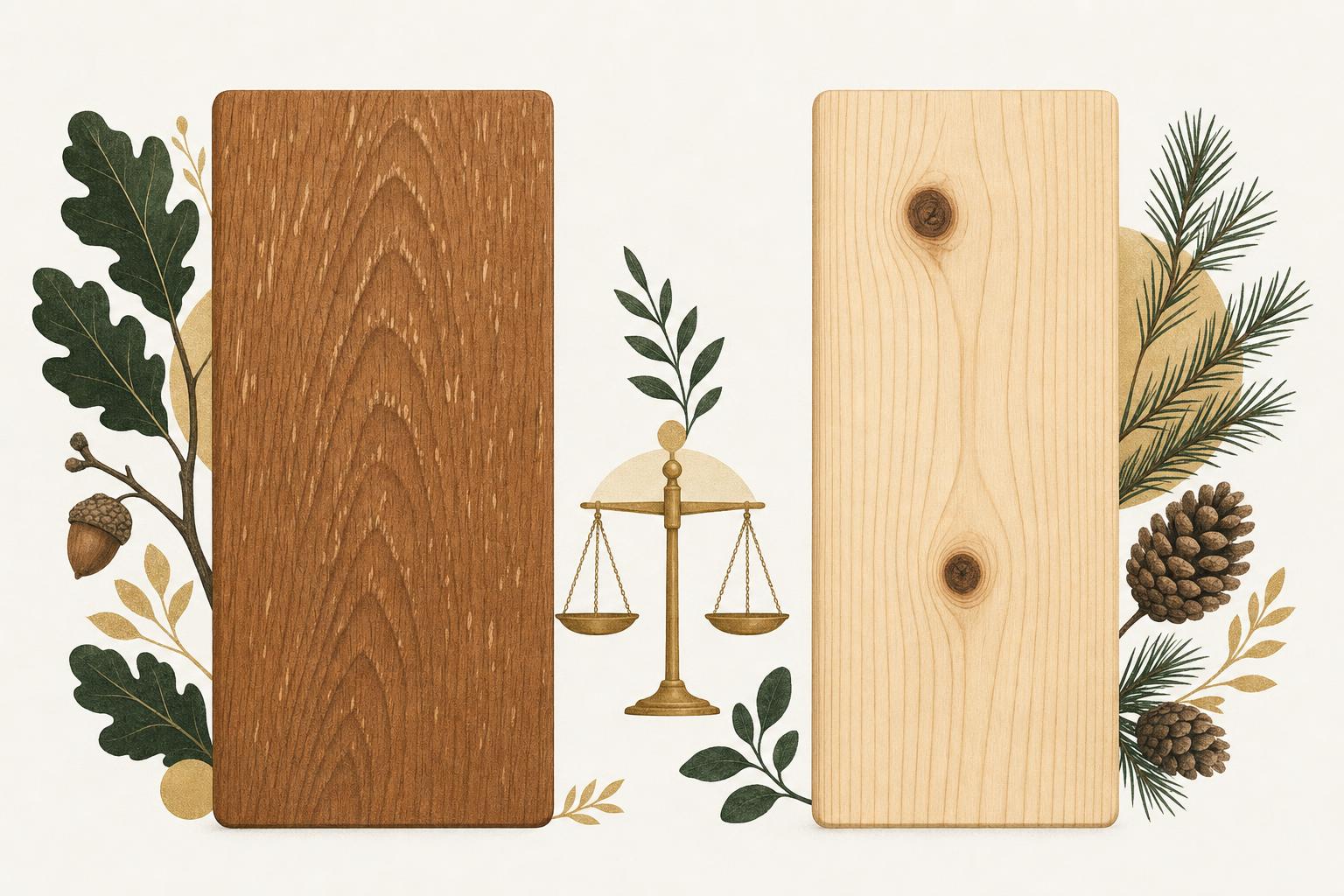
Pine appears constantly in older utility furniture and farmhouse pieces. Knots, dents and a resin smell inside drawers give it away.
Photograph the honest spots
Factories rarely finish surfaces the buyer never sees. Pull a drawer and photograph its side, or shoot the underside of the top where the raw wood shows. Those unfinished surfaces are what LasWood reads best, and the species profile that comes back includes hardness and finishing notes, which is exactly what you need before refinishing or repairing the piece.

Questions people ask
How can I tell veneer from solid wood?
Look at the edge: veneer shows a thin face layer over a different core, and the grain on top will not wrap over the corner. A repeating, identical grain pattern across panels is another veneer giveaway.
Does identifying the wood change how I should refinish it?
Yes. Open-pored woods like oak need grain filler for a smooth finish, cherry blotches under stain without a conditioner, and maple is usually better dyed than stained.