Hardwood vs softwood: what actually differs
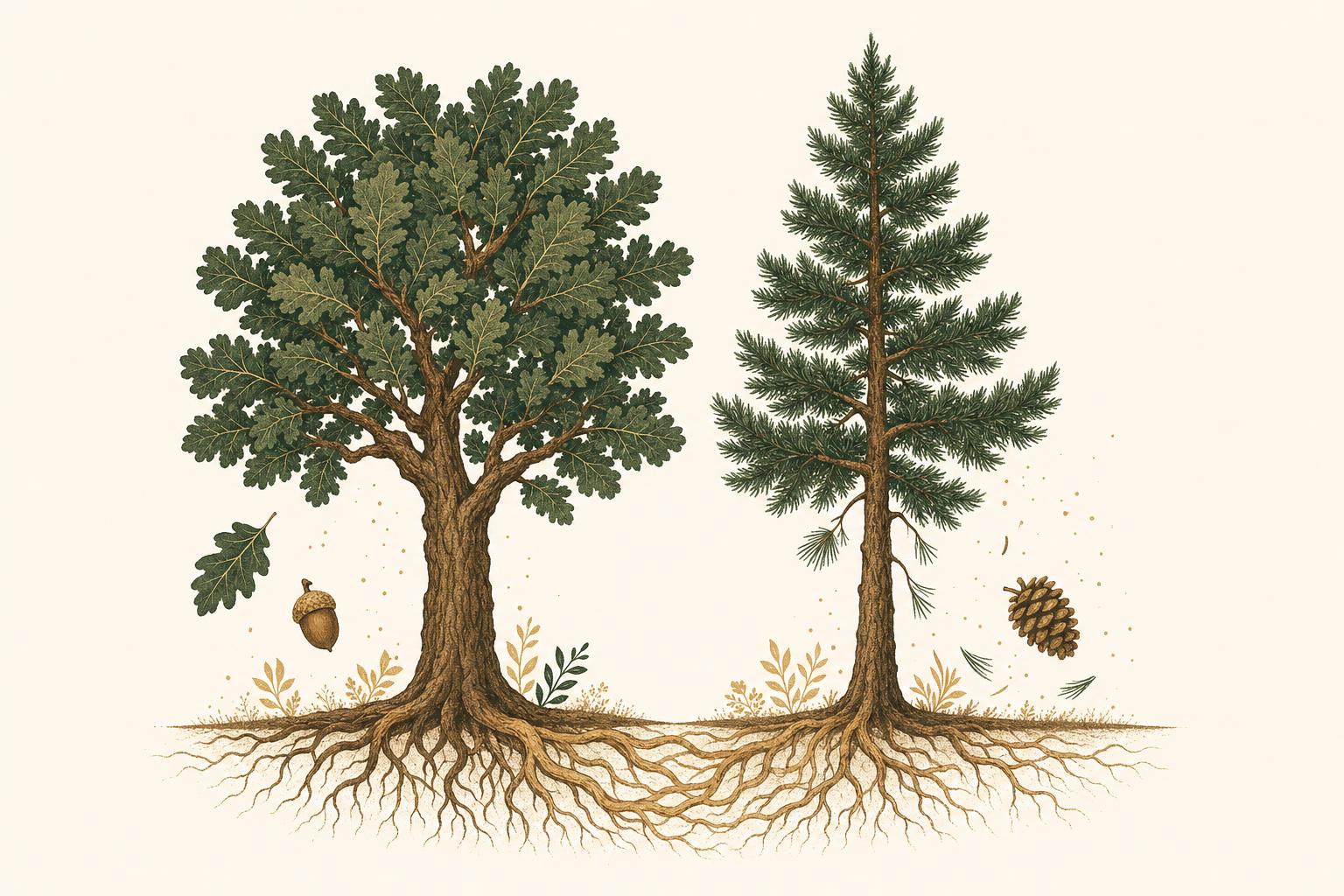
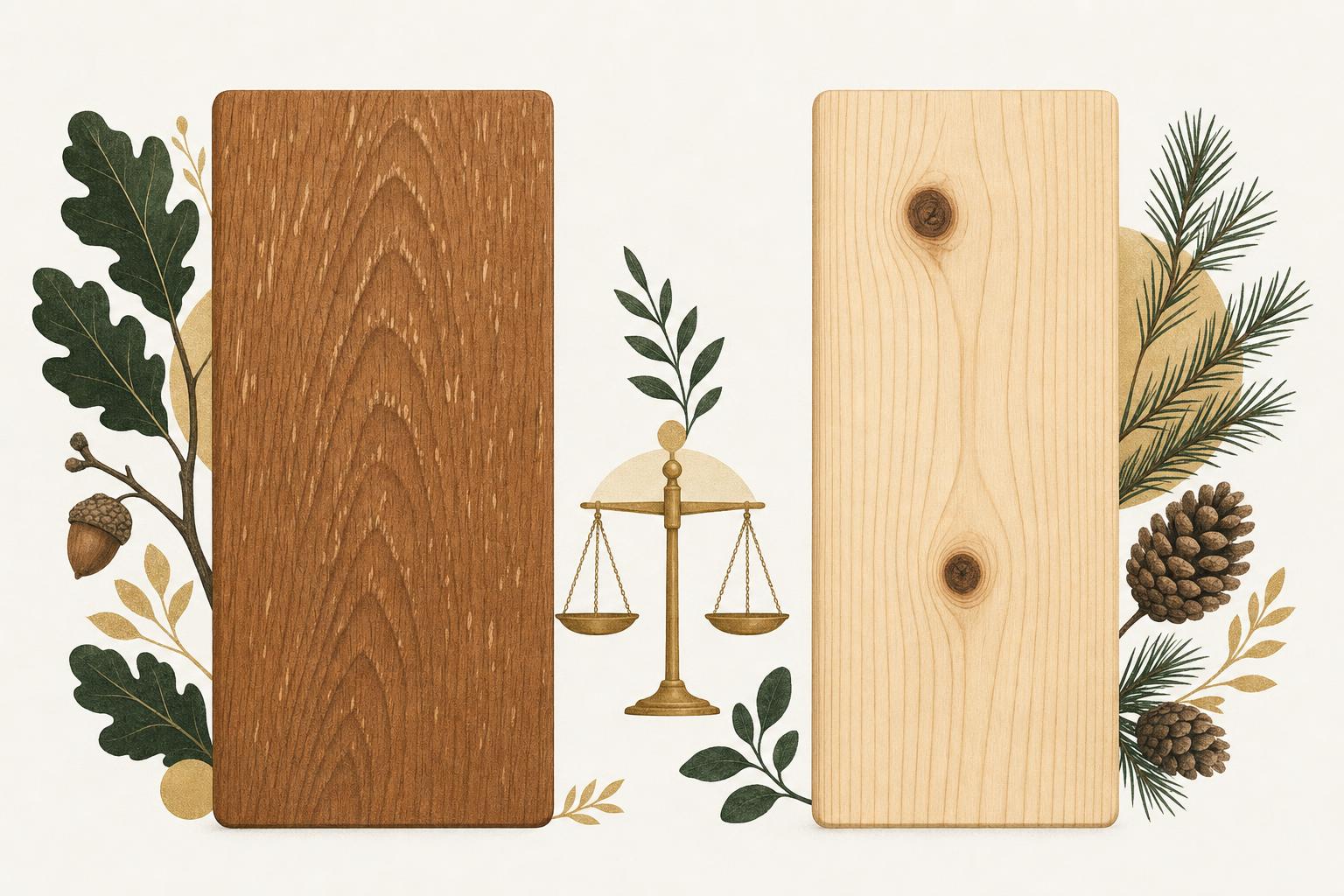
Hardwood means the wood of a broadleaf tree (oak, maple, walnut); softwood means the wood of a conifer (pine, cedar, fir). The names describe botany, not hardness. Balsa, the wood of model airplanes, is technically a hardwood, and yew, a softwood, out-hardens plenty of hardwoods. What follows is the difference that matters when you are choosing a board.
Where the names come from
Broadleaf trees are angiosperms: they flower, drop seeds in fruit or nuts, and most shed leaves in winter. Conifers are gymnosperms: needles, cones, mostly evergreen. The wood differs at the cell level. Hardwoods contain vessels, the pores you can see in oak. Softwoods move water through simpler cells and have no pores at all, which is why pine looks and feels smooth.
Hardness is a separate scale
Actual hardness is measured by the Janka test: the force needed to press a steel ball halfway into the wood. Eastern white pine sits near 380 lbf, red oak at 1290, hard maple at 1450, and hickory around 1820. Balsa, a hardwood, scores about 70. When durability matters, check the Janka number for the species, not its category. LasWood shows the rating on every species profile it returns.
Which one your project wants
Softwoods dominate construction because conifers grow fast, straight and cheap: framing lumber, decking, fence posts. Cedar and redwood add natural rot resistance for outdoor work. Hardwoods dominate furniture and floors because density takes wear, holds crisp joinery and polishes well. A dining table in pine will collect dents from day one; the same table in oak or maple shrugs off decades.
Telling them apart on sight
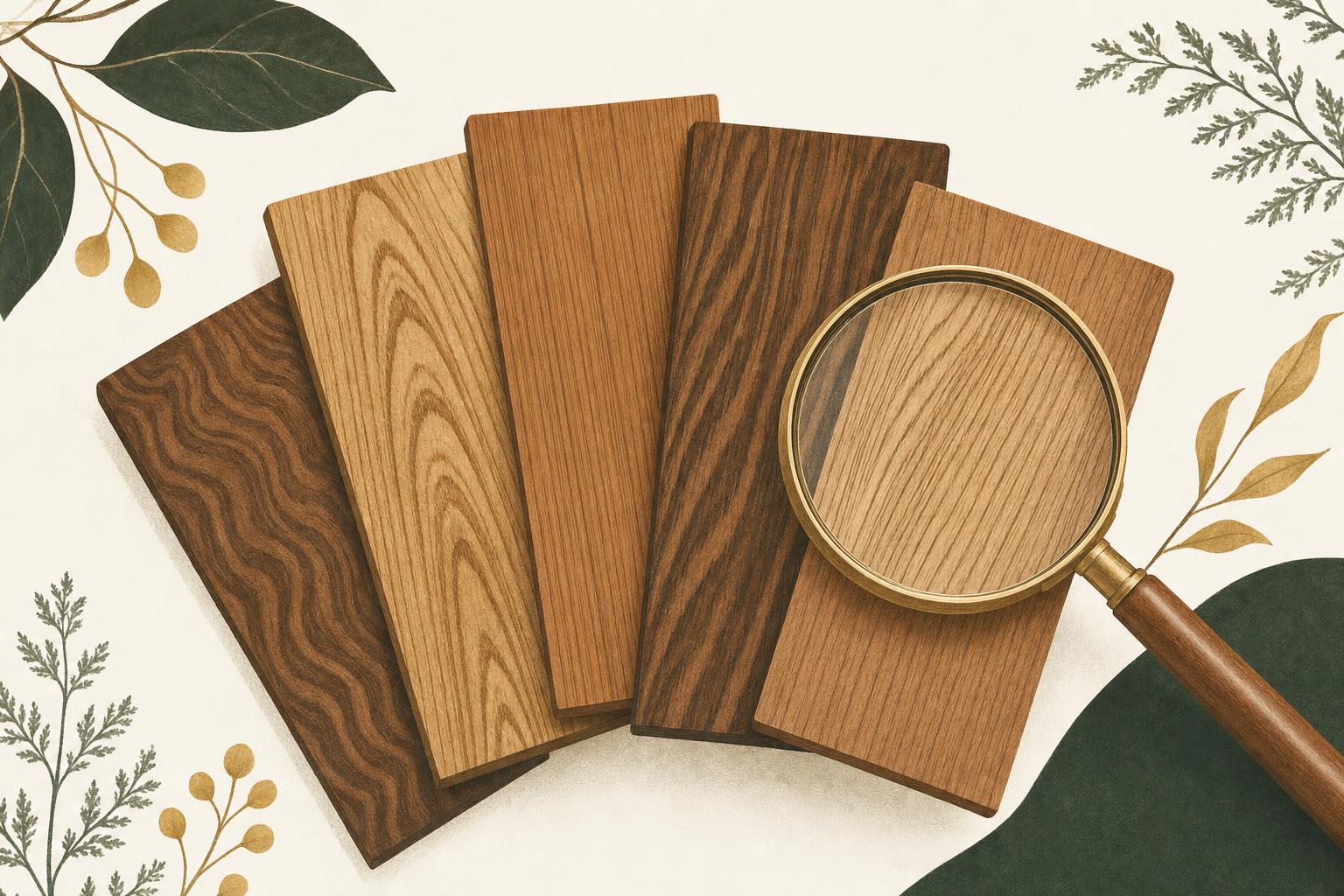
Visible pores mean hardwood, since softwoods have none. Prominent round knots and strong resin smell lean softwood. Weight leans hardwood, with exceptions in both directions. When a board is finished, stained or weathered and the cues conflict, a photo through LasWood is faster than guessing: it names the species, and the profile tells you whether it is a hardwood or softwood along with its hardness and best uses.
Questions people ask
Is plywood a hardwood or a softwood?
It can be either. Construction plywood is usually softwood (fir or pine); cabinet-grade plywood carries a hardwood face veneer such as birch, oak or maple over a mixed core.
Are hardwoods always more expensive?
Usually, because broadleaf trees grow slower, but not always. Poplar is a hardwood that often costs less than clear pine, which makes it a favorite for painted furniture.