How to tell oak from pine
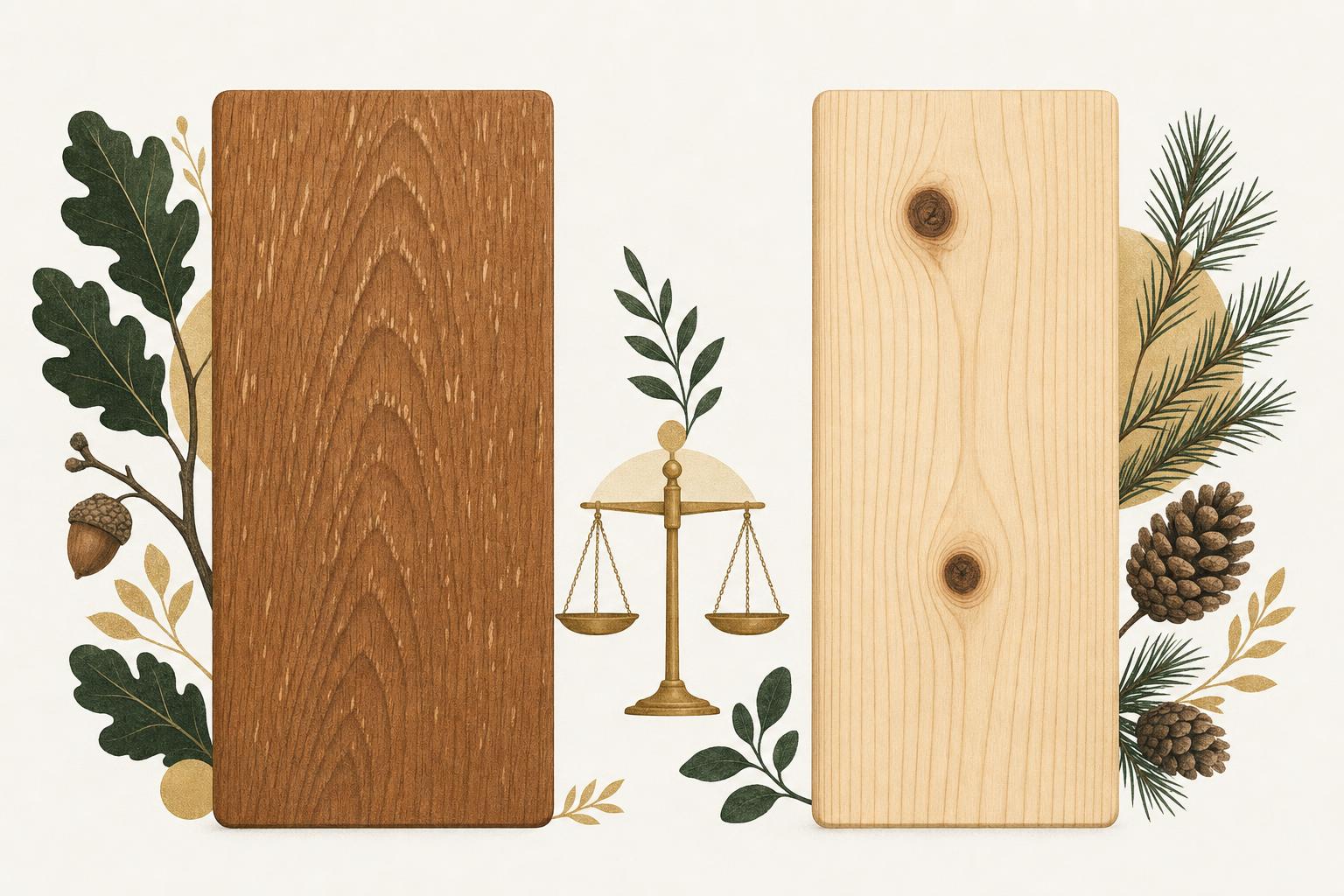
Pick the board up. Oak feels heavy and dense; pine feels light. Then look for pores: oak's grain is made of open lines you can catch a fingernail in, while pine is smooth with round knots and a resin smell. Those two checks answer the question nine times out of ten, and the checks below cover the stained "oak-look" boards that cause the rest.
The one-minute checklist
Weight: oak is roughly twice as dense as white pine. Pores: oak has them, visible and tactile; pine has none. Knots: pine is full of round, dark knots; oak knots are rare and irregular. Smell: fresh-cut pine smells of resin, oak smells faintly sour, like vinegar on a barrel. Hardness: a fingernail dents pine easily and barely marks oak.
Why stained pine fools people
Furniture marketed as "oak finish" is often pine or rubberwood under an oak-colored stain. The stain copies the color but cannot add pores. Run your nail across the surface: real oak feels ridged along the grain lines even under thick finish. Stained pine feels uniformly smooth, and its knots eventually shadow through the finish as darker circles.
Ray flecks, oak's signature
Quartersawn oak shows ray flecks: shiny, irregular ribbons that cross the grain at right angles. No common softwood shows them. On flatsawn oak you will instead see the classic cathedral grain, wide arching patterns with visible pore lines inside them. Pine's cathedrals are smooth, with color variation but no texture.
Confirm with a photo
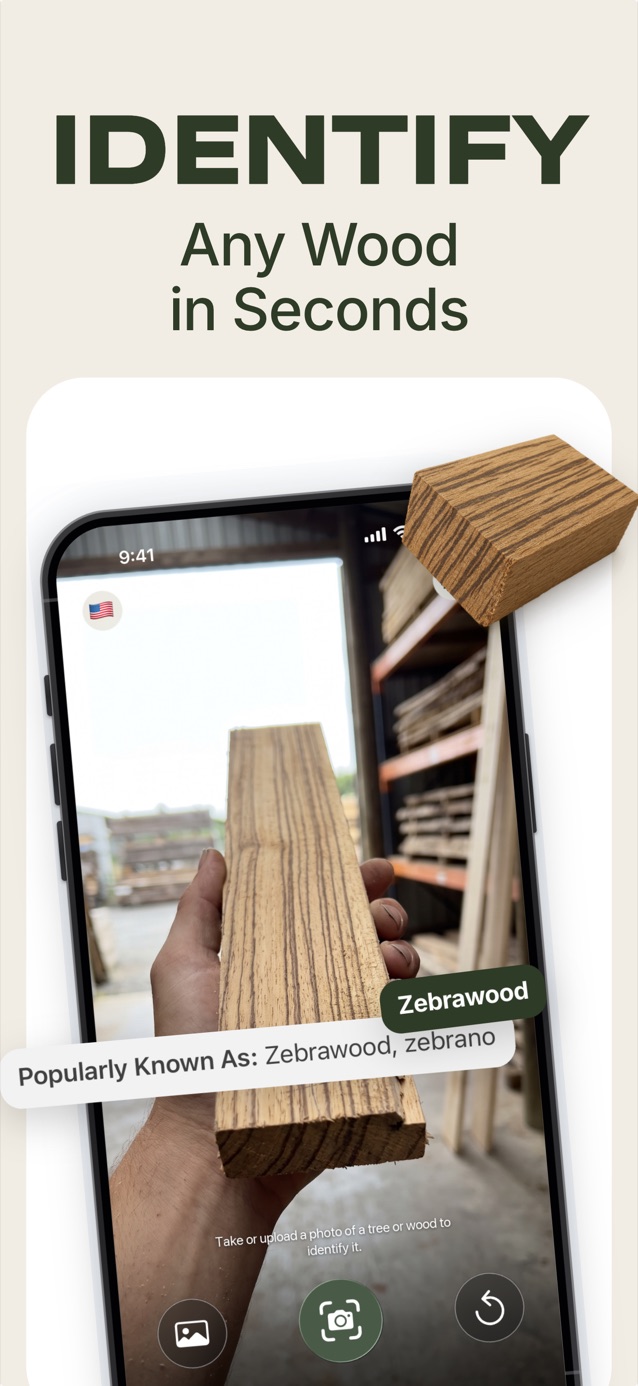
The store listing for LasWood was written around this exact situation: wondering whether an "oak" board is pine pretending to be fancy. Photograph the face grain in daylight and the app tells you which one you are holding, along with the Janka hardness that explains why the oak version costs three times more. If it turns out to be red oak versus white oak, the end grain photo settles that too: white oak's pores are plugged with tyloses, red oak's are open tubes.
Questions people ask
Is red oak or white oak better for furniture?
Both work well. White oak is harder, more water resistant and suits outdoor or kitchen pieces; red oak is cheaper, slightly easier to work and fine for indoor furniture.
Can pine ever be the better choice than oak?
For painted pieces, prototypes and anything you want light, yes. Pine costs less, cuts faster and takes paint well; its softness only matters on surfaces that take wear.