How to identify a tree by its bark
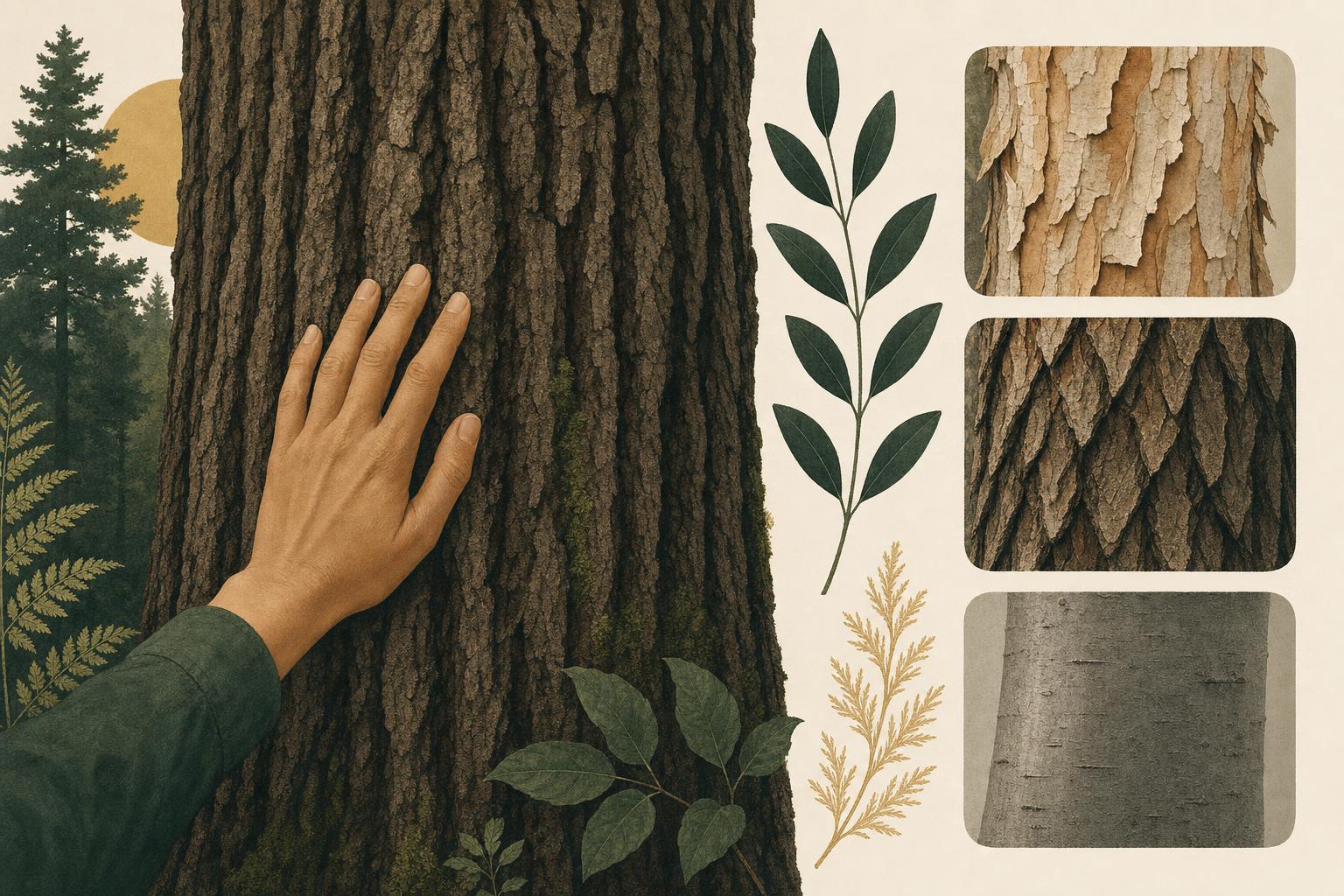
Bark identifies a tree in any season, which matters because leaves are gone half the year. Read three things: texture (smooth, ridged, peeling or scaly), ridge pattern (the shape of the furrows), and color. Those three separate the common backyard and forest species reliably, and a bark photo in LasWood confirms the call.
The four bark textures
Smooth bark that stays smooth for life belongs to a short list: beech (gray, elephant-skin), young maples and hollies. Peeling bark is even shorter: paper birch curls in white sheets, river birch in salmon flakes, shagbark hickory in foot-long vertical strips, sycamore in camouflage patches. Ridged bark covers the oaks, ashes and elms, and the ridge pattern splits them. Scaly bark, small plates that flake at the edges, points to cherry, older maples and pines.
Reading ridge patterns
White oak breaks into light-gray vertical blocks. Red oak runs long, unbroken ridges with shiny stripes down their centers, as if someone dragged a ski down the trunk. Ash forms tight diamonds, a pattern regular enough to spot at a distance. Black walnut cuts deep, dark chocolate furrows. Elm's ridges cross into rough diamonds with a corky feel.
Color and the trunk's story
Color works best as a tiebreaker. Cherry bark carries horizontal dash marks called lenticels, dark and shiny like burnt paper. Sycamore turns white higher up the trunk. Pines go from gray plates to a cinnamon tint in mature ponderosa. Scars, lichen and moisture all shift color, so judge it on a dry day and on the trunk's shaded side.
One photo instead of a field guide
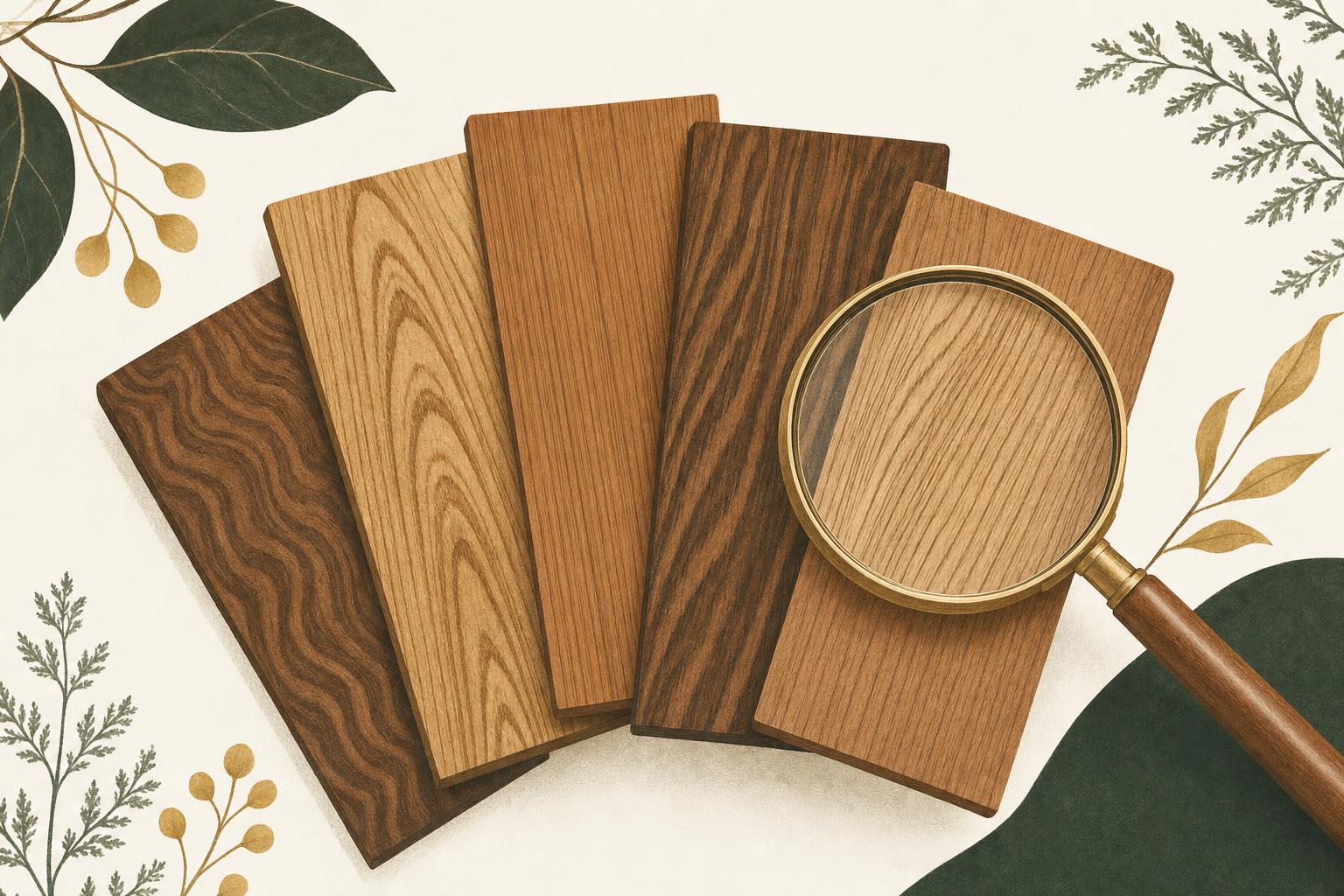
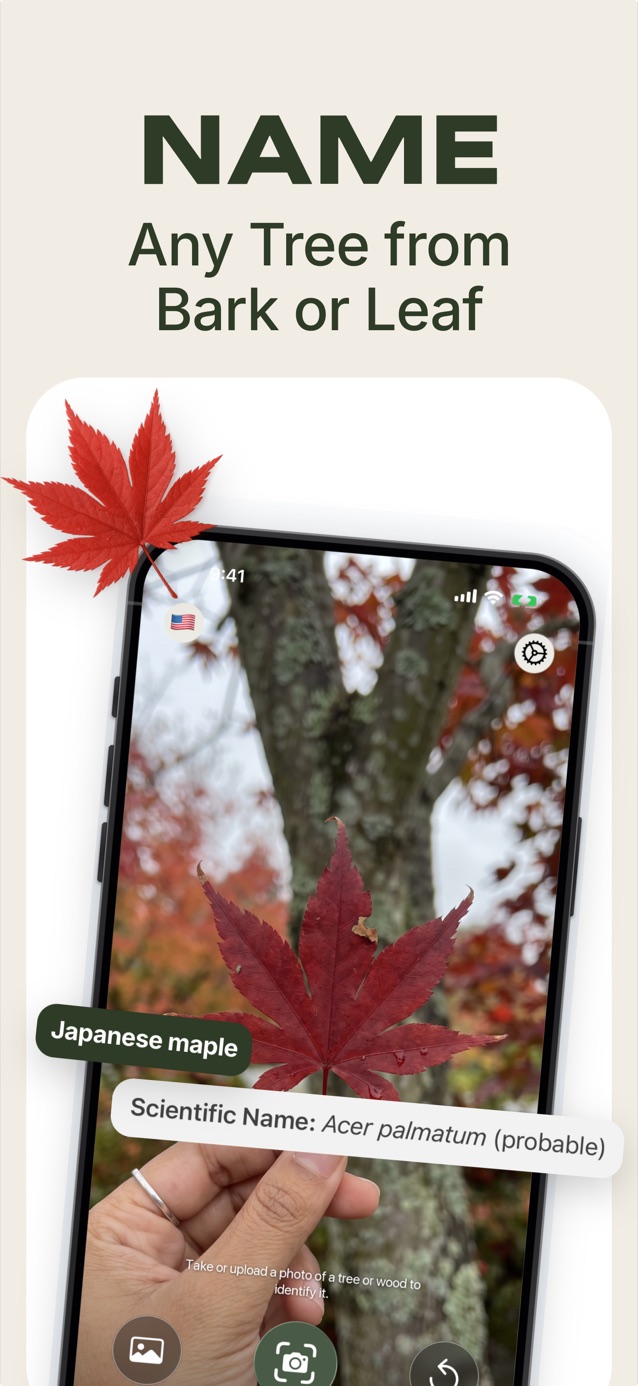
Bark keys in field guides assume you already know terms like "furrowed" and "exfoliating". A photo skips the vocabulary. Frame a section of trunk at chest height, get the texture in focus, and LasWood returns the species with its habitat and profile. It reads leaves, wood grain and boards with the same camera flow, so a walk in the woods and a walk through the lumberyard use the same app.
Questions people ask
What part of the tree should I photograph for identification?
Chest-height trunk bark in even light, filling most of the frame. If the bark is ambiguous, add a second photo of a leaf, bud or the overall silhouette.
Does bark identification work on young trees?
It is harder, since many species start smooth and gray. On saplings, buds and leaf scars identify better than bark; by the time a trunk reaches arm thickness the adult texture shows.