Types of wood and what each one is for
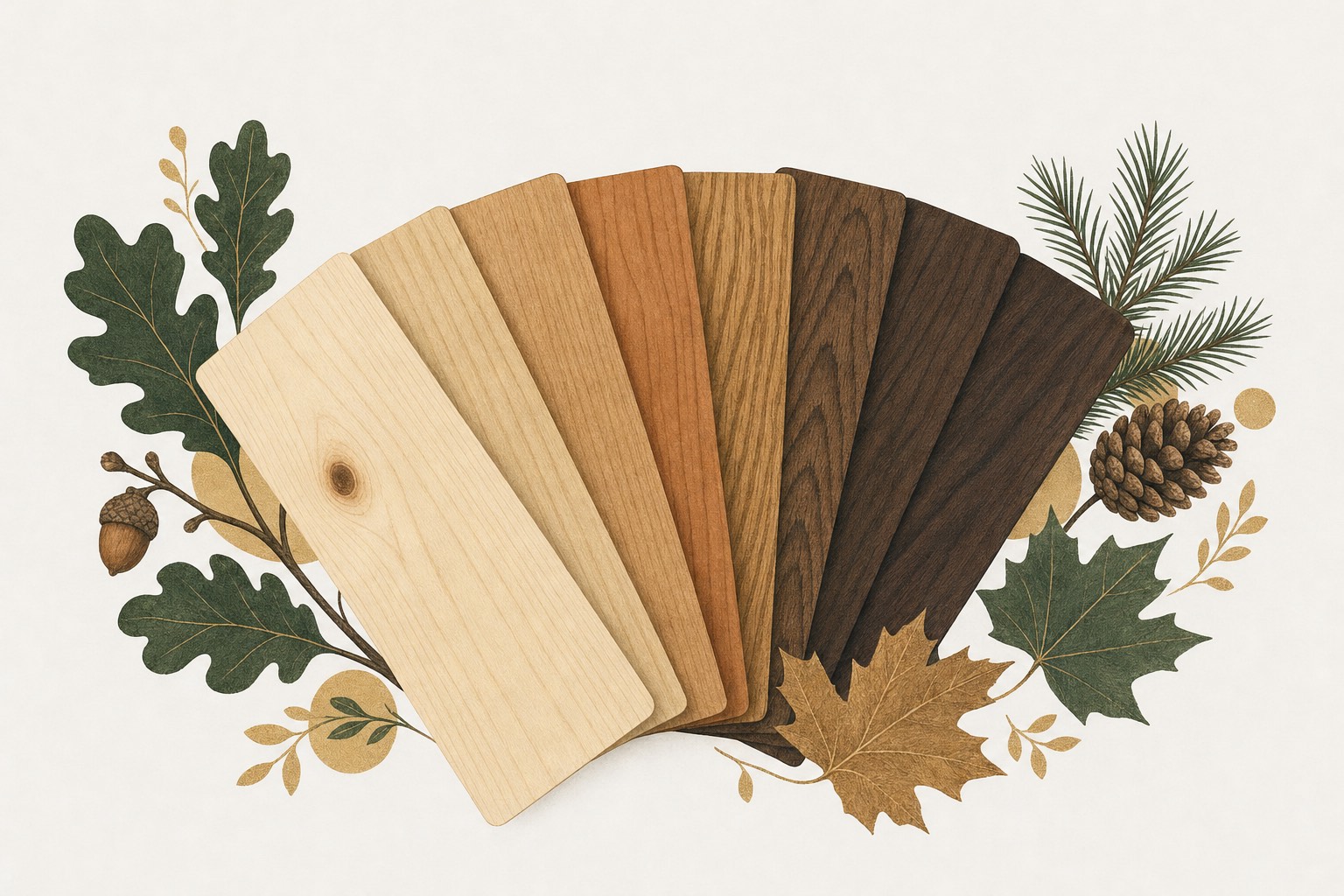
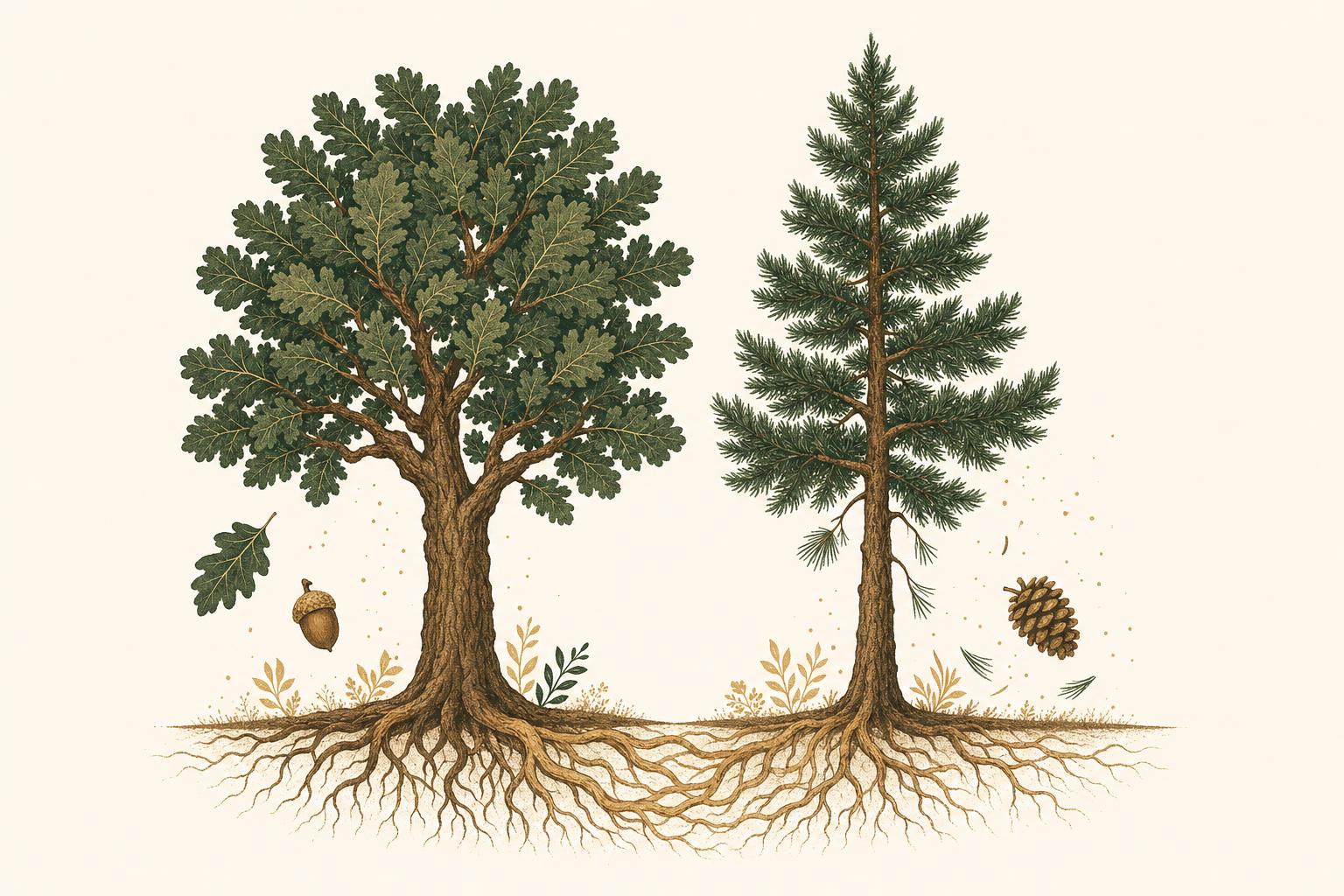
Wood comes in three families: hardwoods from broadleaf trees (oak, maple, walnut), softwoods from conifers (pine, cedar, fir), and engineered sheet goods made from both (plywood, MDF). About twenty species cover nearly everything sold at a lumberyard or used in furniture. This guide gives each one a line on how it looks, how hard it is and what it is best for.
Hardwoods you will see most
Oak (red and white): heavy, open-grained and strong, the default for floors, tables and cabinets. Hard maple: pale, very hard and smooth, used for butcher blocks, floors and workbenches. Walnut: chocolate brown and easy to work, the premium choice for furniture. Cherry: fine-grained, salmon-pink when cut, darkening to a deep red-brown with light. Ash: looks like oak, bends well, and is the classic wood for tool handles and chairs.
Poplar: cheap, soft for a hardwood and greenish, the go-to for painted furniture and trim. Birch: pale and fine, mostly met as birch plywood. Hickory: the hardest common domestic wood, used for handles, floors and rustic cabinets. Mahogany and its stand-in sapele: reddish, stable, with a ribbon figure, found in quality furniture and boats. Teak: oily, golden and rot-resistant, the benchmark for outdoor furniture and decking on boats.
Softwoods for building and outdoors
Pine: light, cheap and knotty, used for framing, shelving and farmhouse furniture. Southern yellow pine is much harder than eastern white pine. Douglas fir: strong and straight, the structural lumber of North America. Spruce: light and stiff, sold as construction lumber and prized for instrument tops. Cedar (western red and aromatic): soft, fragrant and naturally rot-resistant, used for fences, siding, closets and chests. Redwood and cypress: durable outdoor woods for decks, planters and garden furniture.
Sheet goods are wood too
Plywood glues thin layers at alternating grain angles, which makes it stable in wide panels; cabinet-grade plywood has a hardwood face veneer. MDF is fine fibers pressed with resin: perfectly flat and great under paint, but heavy and weak at screws. Particleboard uses coarser chips and sits under most flat-pack furniture. OSB is large wood strands, used for sheathing and subfloors. None of these can be identified to a species from their core, though a hardwood veneer face can.
Not sure which one you have?
Labels at big-box stores are vague ("whitewood", "hardwood board", "select") and reclaimed lumber has no label at all. Photograph the clean face or end grain and LasWood returns the species with its hardness, typical uses and finishing notes. That turns a mystery board into one of the types above in a few seconds, before you cut it.
Questions people ask
What is the strongest common type of wood?
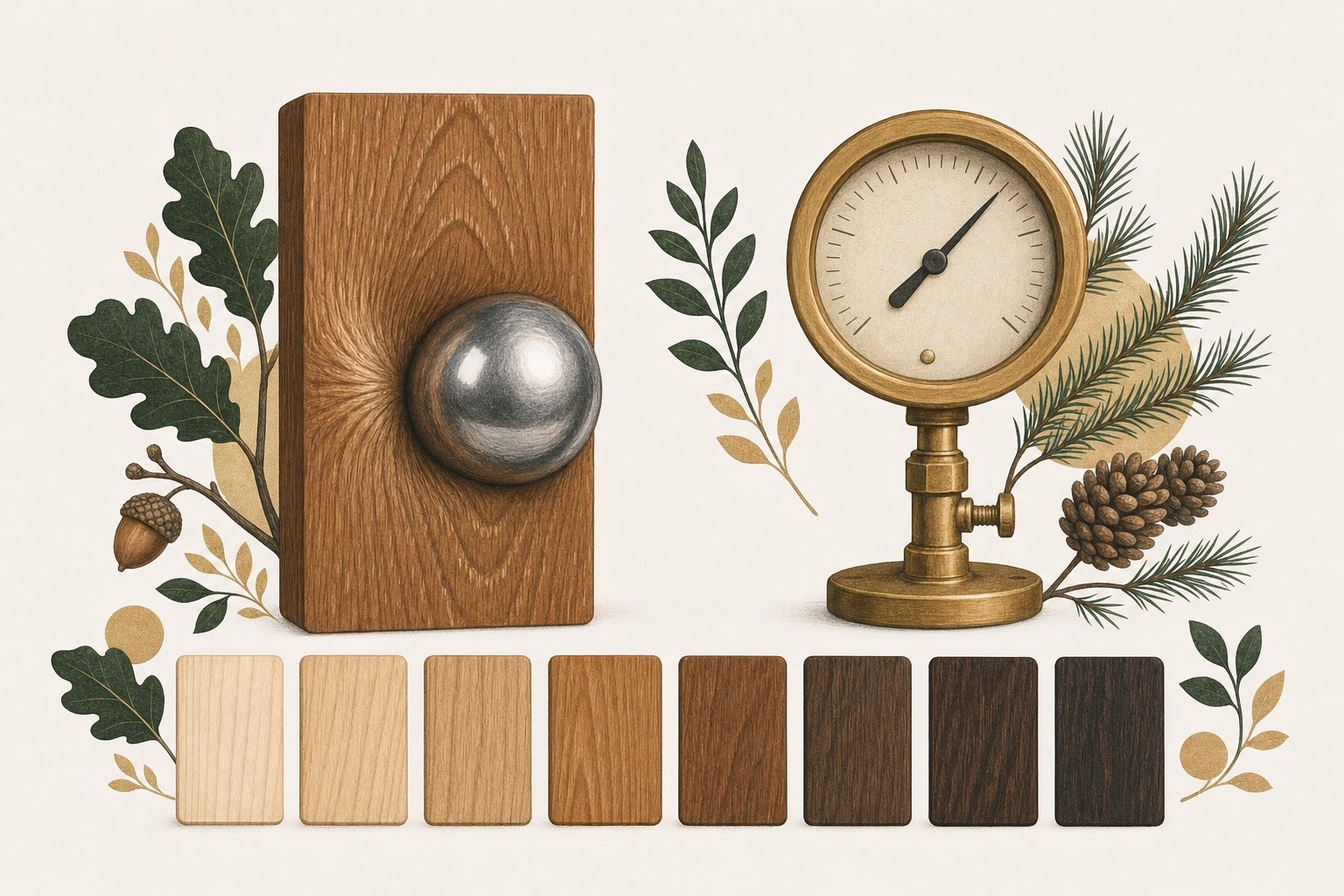
Among widely sold domestic species, hickory is the hardest and toughest, followed by hard maple and white oak. For strength across a span, Douglas fir and southern yellow pine are the structural standards.
What is whitewood at the hardware store?
It is a trade label, not a species. In North America it usually means spruce, pine or fir sold together as SPF construction lumber.